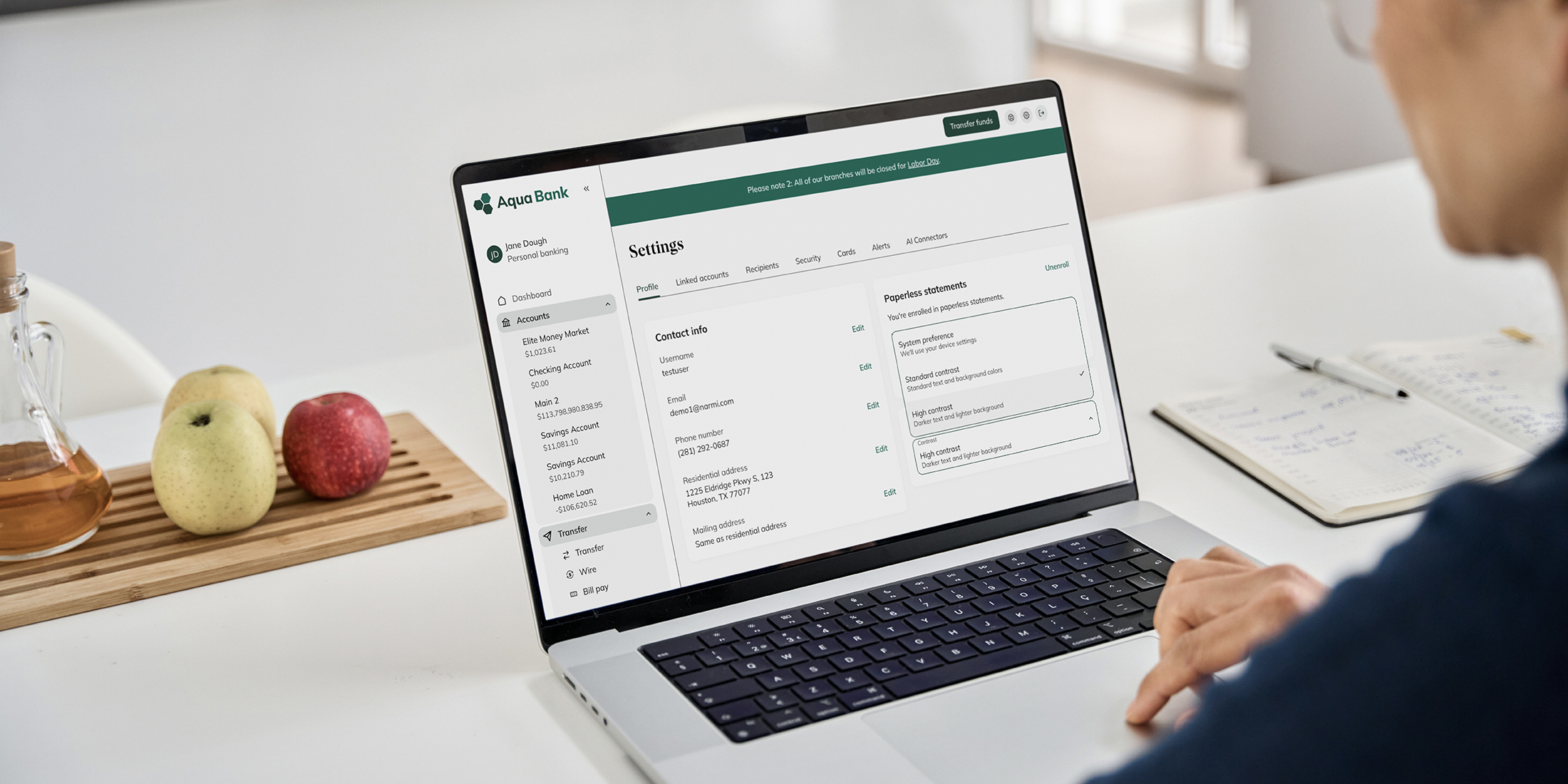

Americans wrote 9.2 billion checks worth more than $24 trillion in 2024 (Federal Reserve, 2025). Every one of those checks carries useful information: who it was from, what it was for, the exact amount and date. Yet for as long as checks have moved through digital banking, almost all of that detail has been thrown away. Narmi Check Autofill changes that by reading each check the moment it arrives and turning it into clean, structured data on the transaction itself. It is part of Narmi's Document Intelligence Suite, a set of tools that extract usable data from the documents banking runs on.
Bank cores pass along only the barest facts about a check, so a deposit often lands as little more than a generic line item. Account holders sometimes cannot tell a transaction is even a check until they click into it, and everything that makes it meaningful, the payer, the memo, the date, stays trapped inside the check image. To get it, they have to open that image and read it by hand, one at a time, with no way to search or filter by who wrote the check or what it was for.
For someone who deposits the occasional check, that is a minor annoyance. For a business, it is a recurring tax on time. A property manager collecting rent across dozens of units has to open image after image just to match each payment to the right tenant, clicking and transcribing before anything can be reconciled. The information they need is sitting right there on the check. Nothing has been able to hand it to them.
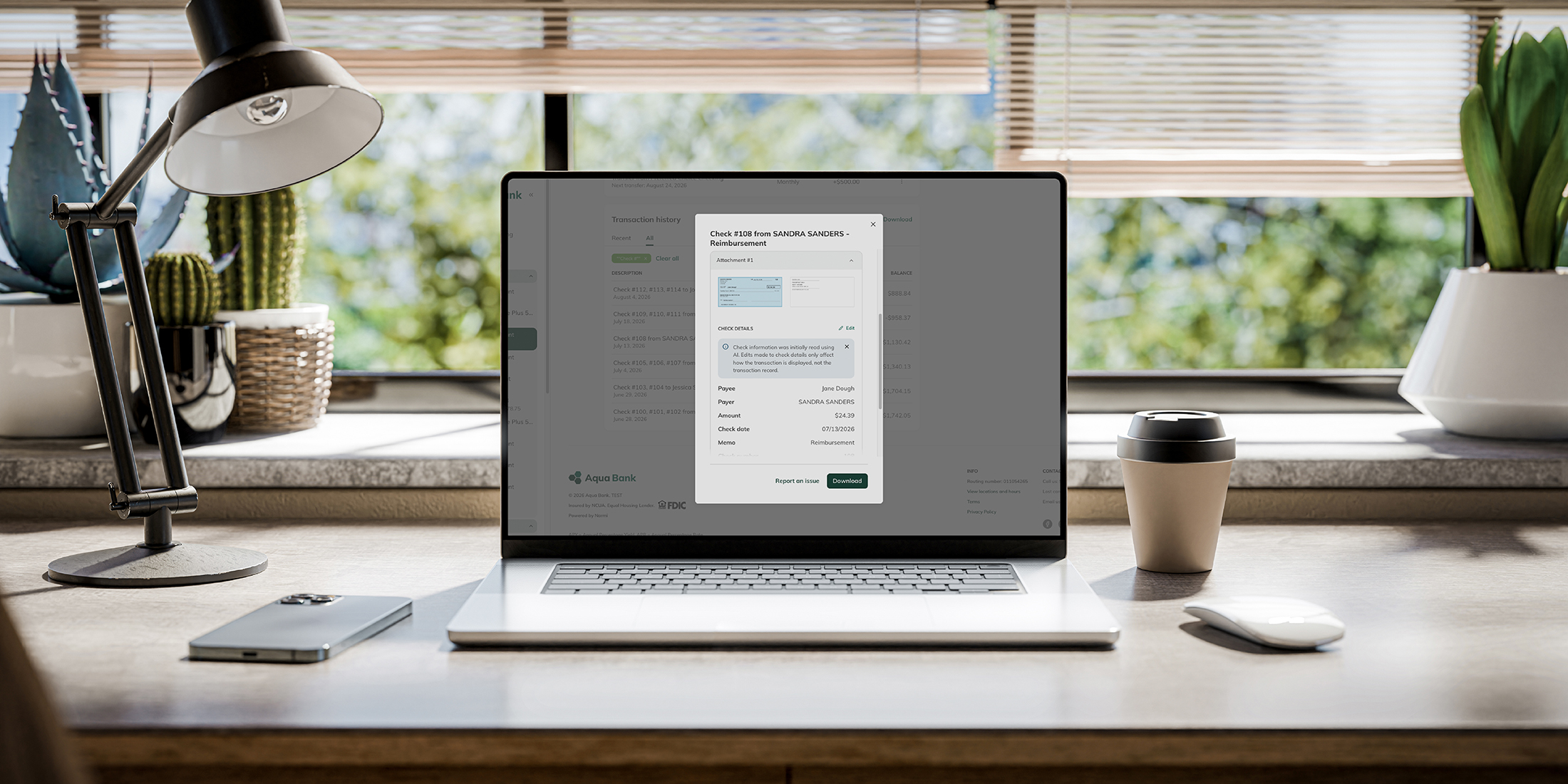
Check Autofill does exactly that. Using a lightweight AI model, it reads the payee, payer, amount, date, and memo directly from the check images an institution already stores. That data surfaces right where people already look. A line that once read only "DEPOSIT" now reads like "Check #1234 to Jane Smith, rent payment." Account holders can search and filter their checks by payer, payee, or memo, and correct any field if a capture is off. It works across web and mobile, handles multi-check deposits, and updates as soon as the images arrive, so the rent-by-unit reconciliation that used to mean opening dozens of images becomes a single, scannable view.
The clearest way to understand the difference is to watch a stack of check images become searchable, editable transactions in seconds.
Check Autofill is a deliberately practical use of AI. It does not ask account holders to change how they bank or adopt anything new. It takes a task people already do, reading a check, and does it for them inside the workflow they already use. The model improves over time as account holders correct fields, and it stays firmly in its lane: edits are for the account holder's own records and never touch the underlying transaction, the balance, or any bank record, and the captured data stays within Narmi. This is AI pointed at a real, everyday problem, with clear guardrails around it.
Making check activity this legible and searchable is something even the largest institutions have been slow to offer. With Check Autofill, a community bank or credit union can put that capability in front of its account holders now, pairing technology that feels genuinely ahead of the curve with the personal service and local trust that a national brand cannot replicate. It is a quiet, practical upgrade that raises what people expect from their bank.